In today’s digital-first world, where businesses rely heavily on technology to run smoothly, managing IT systems effectively has become more critical than ever. This is where COBIT comes into play.
COBIT (which stands for Control Objectives for Information and Related Technologies) is a globally recognized framework created by ISACA (Information Systems Audit and Control Association). It helps organizations manage and govern their IT infrastructure with structure, security, and accountability.
What Is COBIT?
COBIT isn’t a tool or software, it’s a framework. Think of it as a well-defined set of guidelines, best practices, and principles that help companies align their IT goals with overall business objectives. It’s designed for managing risk, ensuring compliance, optimizing performance, and most importantly, keeping IT systems in check.
Originally developed in the 1990s, COBIT has evolved over the years. The most current version, COBIT 2019, is more flexible and customizable than its predecessors. It supports modern enterprises that deal with changing regulations, data privacy laws, and rising cybersecurity threats.

Why Is COBIT Important?
Here’s why COBIT matters, not just to IT departments, but to the entire organization:
1. Aligns IT with Business Goals
COBIT helps bridge the gap between what the business wants and what IT delivers. It ensures that technology supports business strategies, not just runs in the background.
2. Improves Decision-Making
With clear processes and governance models, COBIT gives management the information they need to make better, risk-aware decisions related to technology.
3. Manages Risk
Cyber threats, data breaches, and system failures can be devastating. COBIT provides a structured approach to identify, assess, and reduce IT risks, helping companies stay secure and compliant.
4. Ensures Compliance
With increasing regulatory requirements (think GDPR, SOX, HIPAA), organizations need a reliable way to prove they’re managing IT responsibly. COBIT offers documentation and audit support that help businesses stay in line with laws and regulations.
5. Boosts Operational Efficiency
By promoting standardization and repeatable processes, COBIT reduces duplication of efforts and minimizes inefficiencies. It ensures that resources (time, money, people) are being used wisely.

Who Uses COBIT?
COBIT is used worldwide by:
- Large corporations needing formal IT governance
- Financial institutions for managing risk and compliance
- Government agencies to uphold public accountability
- Auditors and consultants to assess IT systems
- CIOs and IT leaders to build structured processes
Whether a company is just starting out or is a multinational enterprise, COBIT can be scaled and tailored to meet their unique IT governance needs.
Key Components of COBIT
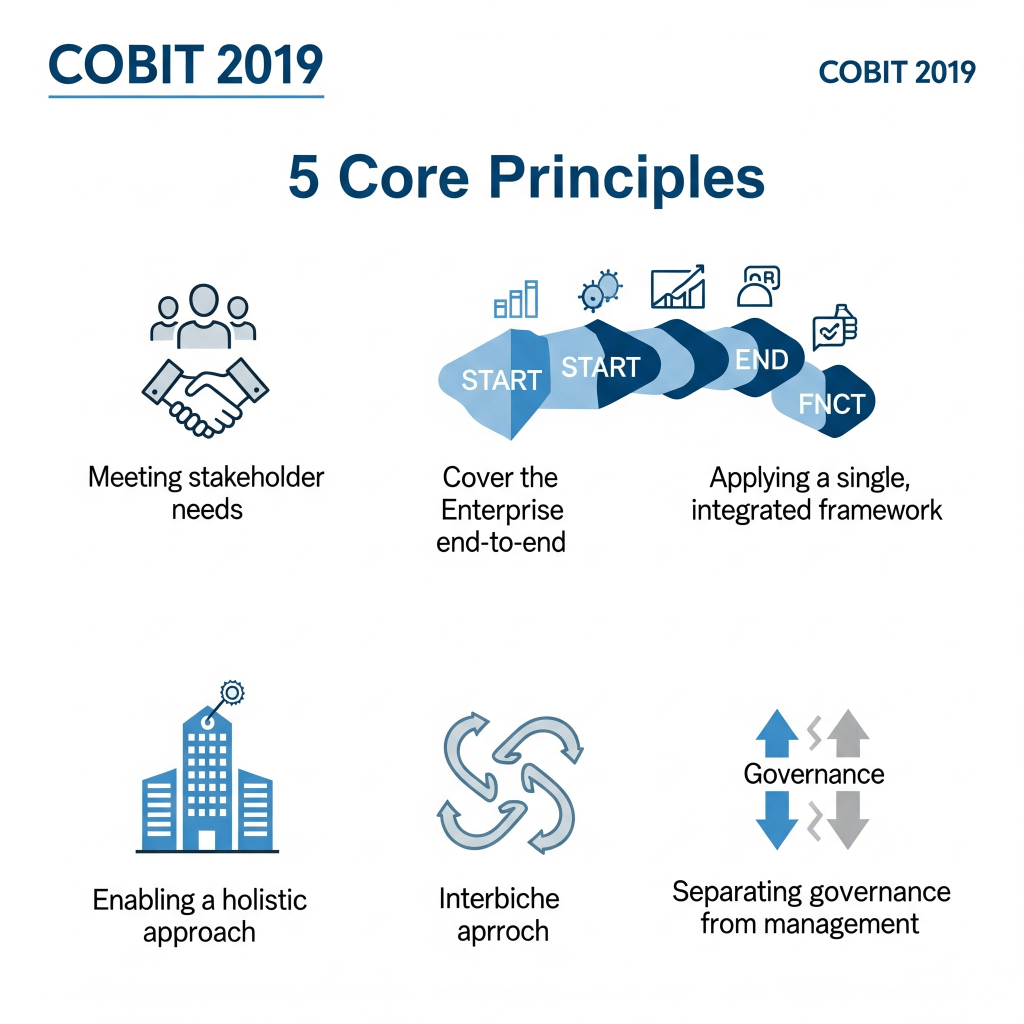
COBIT 2019 is built around five core principles:
- Meeting stakeholder needs
- Covering the enterprise end-to-end
- Applying a single, integrated framework
- Enabling a holistic approach
- Separating governance from management
These principles guide how organizations should design, implement, and continually improve their IT governance strategies.
Final Thoughts
In a time when technology drives almost every part of a business, having a clear, effective system for managing IT is non-negotiable. COBIT gives organizations the structure and guidance they need to not only survive in this environment but to thrive.
For professionals and organizations looking to implement this framework successfully, COBIT training can be a valuable investment. It equips teams with the knowledge and skills needed to apply COBIT principles effectively and get the most out of their IT governance efforts.
Whether you’re a business leader aiming to reduce IT risks or an IT professional focused on delivering value, understanding and applying COBIT – with the right training – can be a powerful step in the right direction.



 Techinsights